Camille's Portfolio

Newton Robot Capstone Project

The Newton Project was an interdisciplinary capstone project aimed at designing and developing an accessible, modular and cost-effective quadruped robotic platform. The primary objective was lowering the barrier of entry for students, hobbyists and researchers interested in the field of legged locomotion and more advanced robotics, beyond the level of Arduino and other entry-level platforms.

In practical terms, the project aimed to deliver a fully functional quadruped robot with 12 degrees of freedom, 3D-printable parts, cheap and cost-effective electronics, and a high interchangeability of components, as well as a software platform for a reinforcement learning system. The project was done in a team of 7 engineering students from different backgrounds and majors.

My role in the team was as the main designer for the electrical, hardware and firmware system, with iterative testing and integration of many motors, drivers and encoder systems, a large amount of wiring, assembly and soldering, as well as a wide use of communication protocols and low-level embedded software. This was also conducted in parallel with the rest of the team, from the mechanical design to the software and RL implementation.
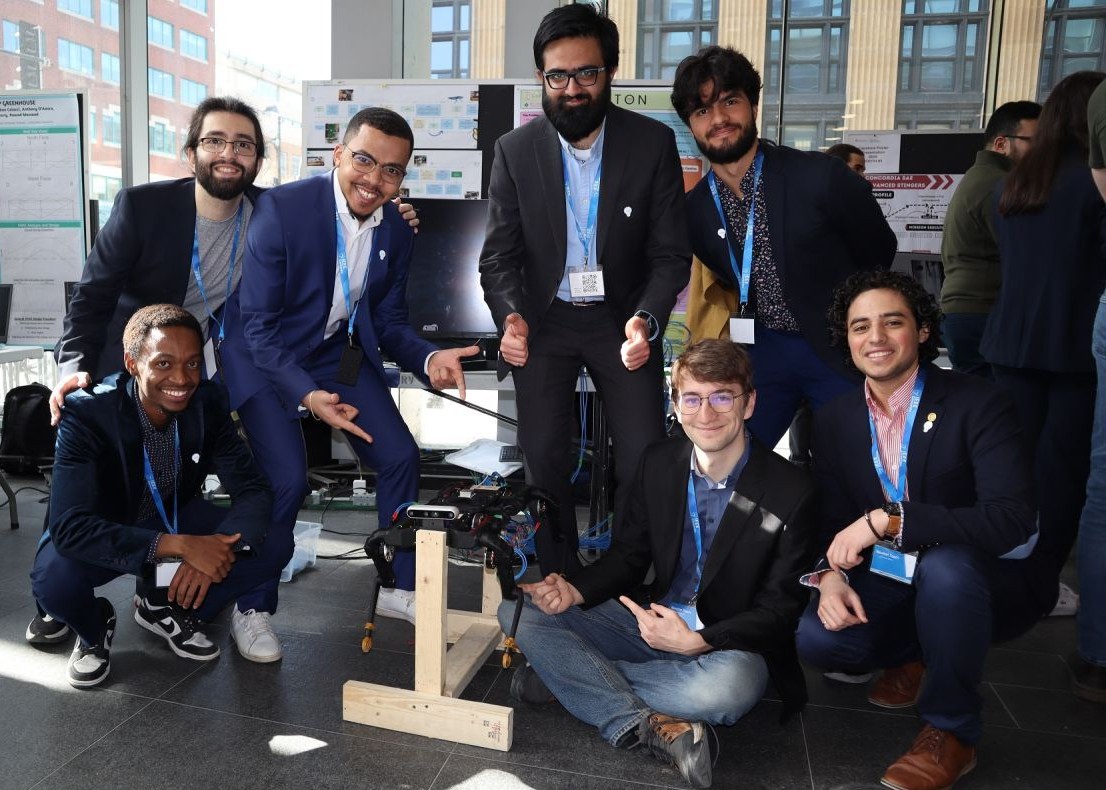
Newton Robot Profile

Hardware

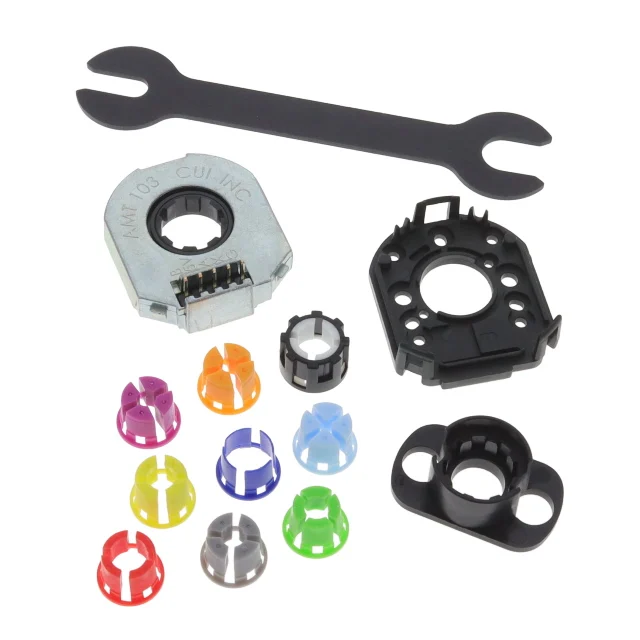
Custom BLDC motor design optimized for quadruped locomotion. Integrated motor drivers and high-precision encoder systems enable accurate position feedback and coordinated leg movement. The frame is constructed using lightweight materials to maximize efficiency.

  • BLDC Motors
  • Placeholder: Description of custom BLDC motor design

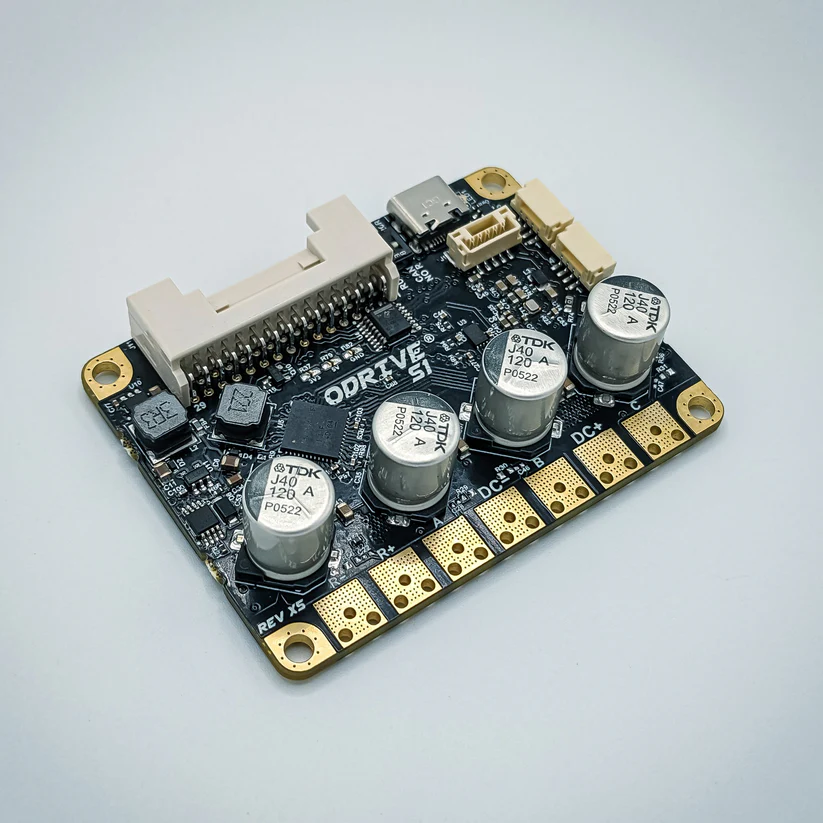
  • Custom Motor Drivers
  • Details about driver implementation and control

  • Rotary Encoders
  • Placeholder: Encoder integration and feedback systems

  • Microcontroller Integration
  • Placeholder: Microcontroller selection and firmware architecture

Newton Robot Hardware Newton Robot Hardware

Control & Firmware

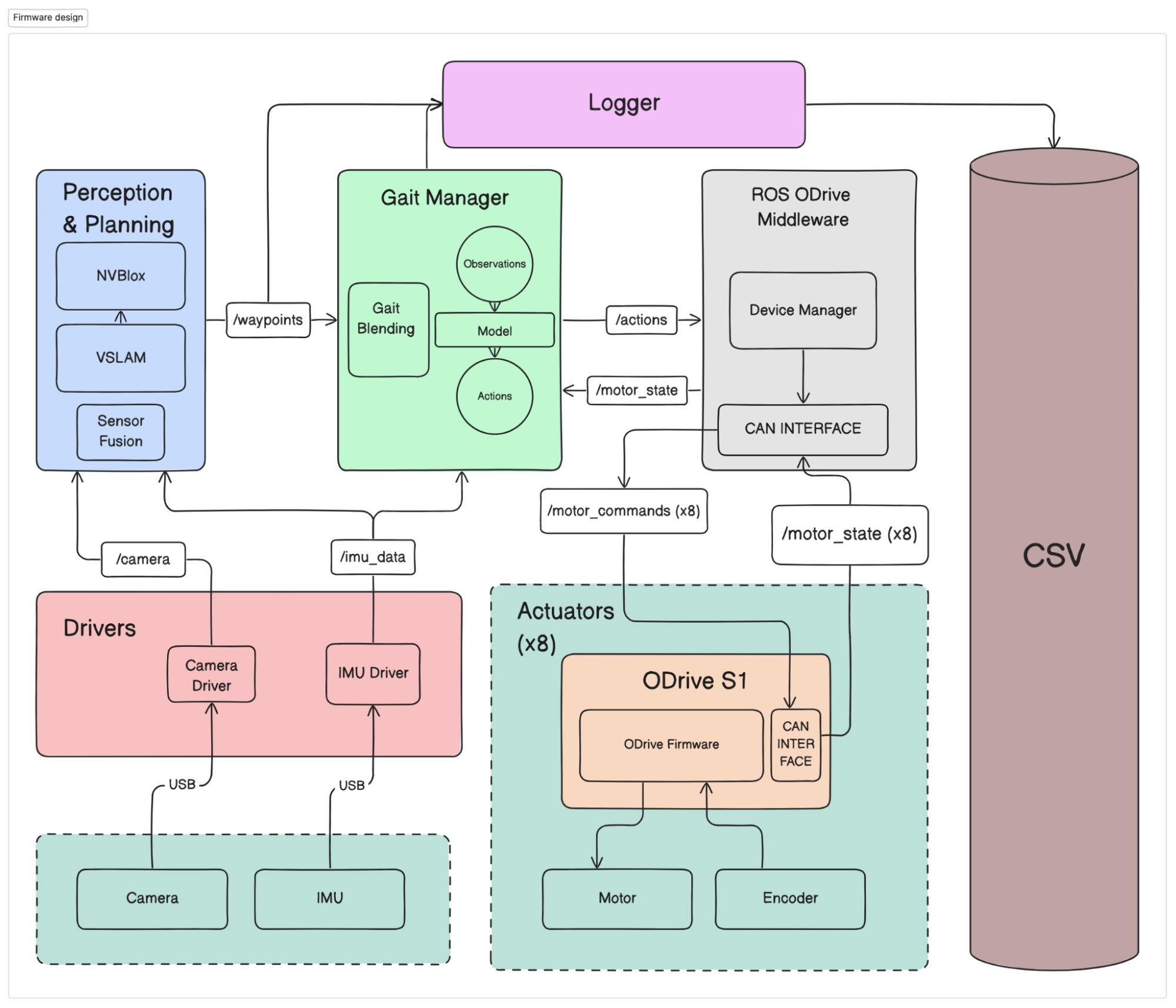
As before, the main objective in the control and firmware system was to establish a simple and linear layout, allowing for easy learning and modifications.

  • Python ML Frameworks
  • Gait Optimization
  • Real-time Control Loop
Newton Firmware Diagram

Simulation and RL

Results

Throughout a full year of work, we achieved a fully functioning quadruped robot capable of walking, although with only 8 degrees of freedom, and with less functionalities then we thought.

However, we all learnt more then we could have imagined, and we gained experience that we have applied and will keep applying in our lives.